
In the high-stakes world of rocketry, even a minor shift in wind direction can mean the difference between a flawless launch and a risky recovery. At the 2025 edition of EuRoC, the European Rocketry Challenge, RocketPy once again relied on Meteomatics’ high-resolution weather data to keep trajectory simulations accurate and launches safe, supporting more than 20 teams of students and young engineers from across Europe.
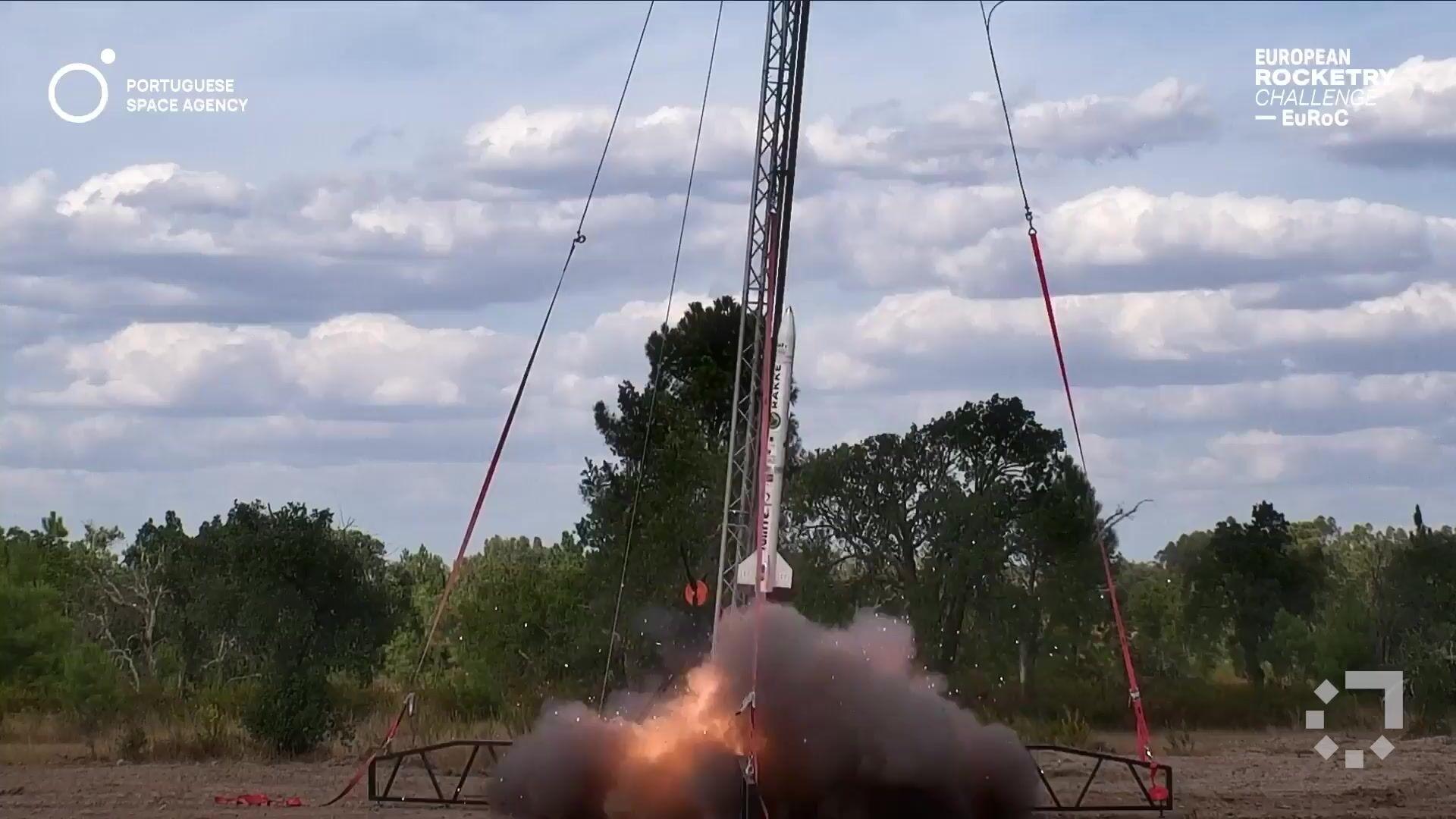
EuRoC: From Pandemic Initiative to Europe’s Leading Rocketry Competition
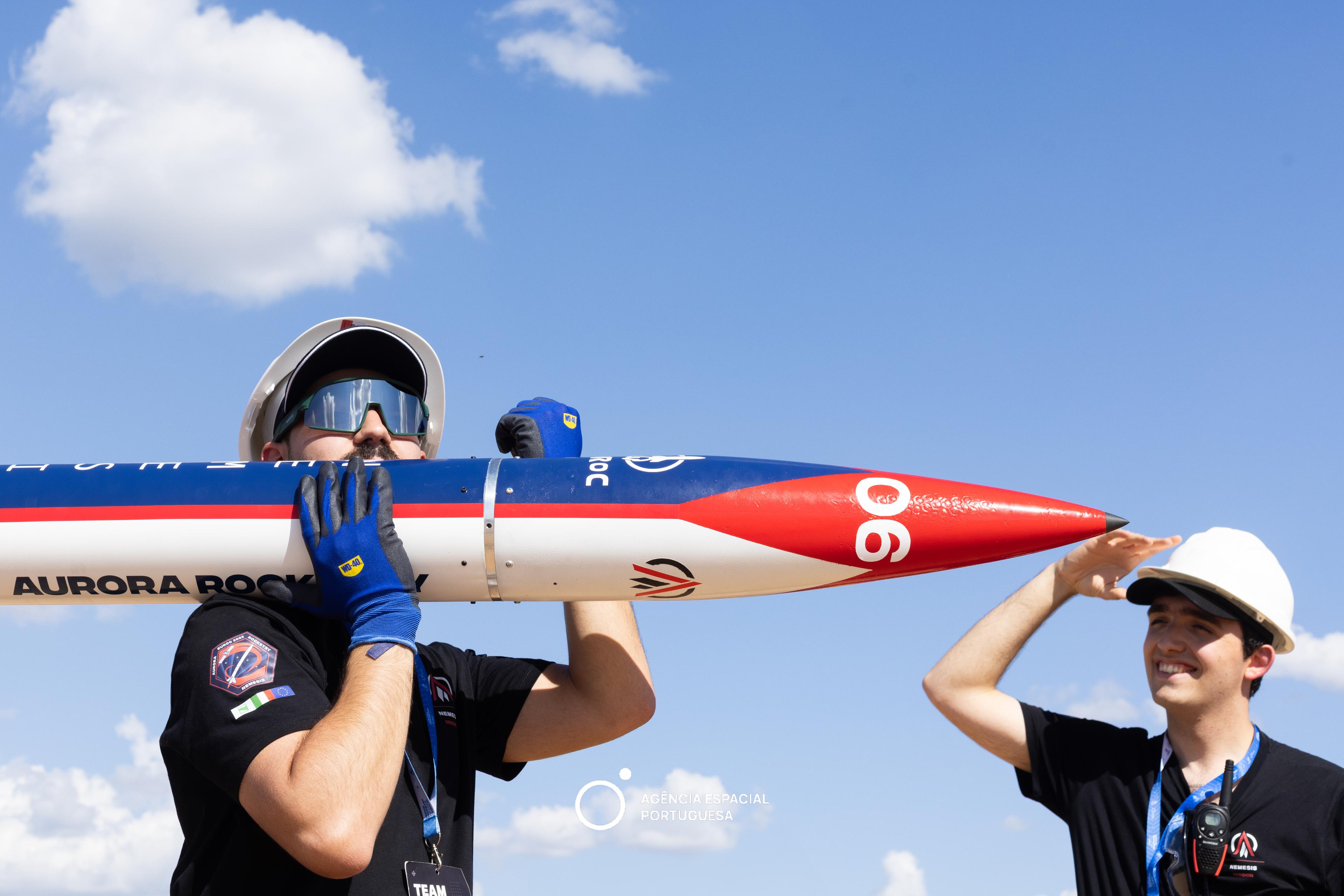
The European Rocketry Challenge (EuRoC) has been held annually in Portugal since 2020. Organized by the Portuguese Space Agency, the event brings together university rocketry teams from across Europe, being the first and only competition of its kind in the continent.
Launched amidst the pandemic as a European alternative to the Spaceport America Cup, held in the USA, EuRoC has quickly evolved into Europe’s premier rocketry event, gathering over 700 participants to design, build, and launch their own high-powered rockets.
But these launches aren’t just about raw power. They demand meticulous planning, coordination and safety measures, especially when dozens of rockets are launched within controlled airspace and from a location within the reach of homes and infrastructure. All rockets launched at EuRoC are designed to touch down minutes after launch and in a safe way, which means organizers must take every precaution to ensure public well-being.
That’s why EuRoC partners with RocketPy and Meteomatics to simulate each rocket’s trajectory under real-world weather conditions.
Safety First: Predicting and Preventing Risks
To ensure a safe and well-coordinated launch environment, EuRoC relies on entities such as firefighters, GNR (a Portuguese military security force), the Portuguese Army, the Portuguese Air Force, but also with RocketPy, a powerful trajectory simulation platform designed specifically for high-powered rockets. Contracted by EuRoC organizers, RocketPy helps teams plan their launches and predict landing zones, a critical step for both safety and logistics.
What sets RocketPy apart is its ability to integrate real-time, high-resolution weather data from Meteomatics directly into its simulation workflows. By feeding in accurate meteorological inputs (such as wind direction and speed, ceiling height, cloud cover, and temperature at varying altitudes), RocketPy enables precise modelling of a rocket’s full flight path, from liftoff to landing, in various scenarios.
RocketPy helps answer questions like:
Where is the rocket most likely to land, both in nominal and off-nominal scenarios?
Will it pass over or descend into hazardous terrain?
How stable is the rocket under current wind conditions?
If the parachute fails to deploy, where would the rocket fall?
To support these simulations, RocketPy has developed a user-friendly API and simulation engine that simplifies complex physics for end users. Even those with limited programming experience can define key inputs, such as date, time, coordinates, altitude range, and vertical resolution, and automatically retrieve weather data up to 10 or 11 kilometres in altitude, depending on the rocket’s expected apogee. The collected data is stored in JSON format and used to generate detailed visualizations, including wind profiles and landing zone predictions.
In fact, RocketPy’s accuracy has proven invaluable. In one recent case, a team lost contact with their rocket mid-flight. Thanks to RocketPy’s predictive model, grounded in Meteomatics’ weather data, they were able to narrow down the probable landing area and recover the rocket successfully.
Looking Ahead
By providing hyperlocal, real-time insights, Meteomatics enables RocketPy and EuRoC organizers to operate with a higher degree of precision and confidence, turning complex, high-risk operations into a safe experience.
As the next generation of aerospace engineers continues to reach for the stratosphere, the blend of physics-based simulation and ultra-precise meteorological data will remain an essential part of their journey from classroom to launchpad.